
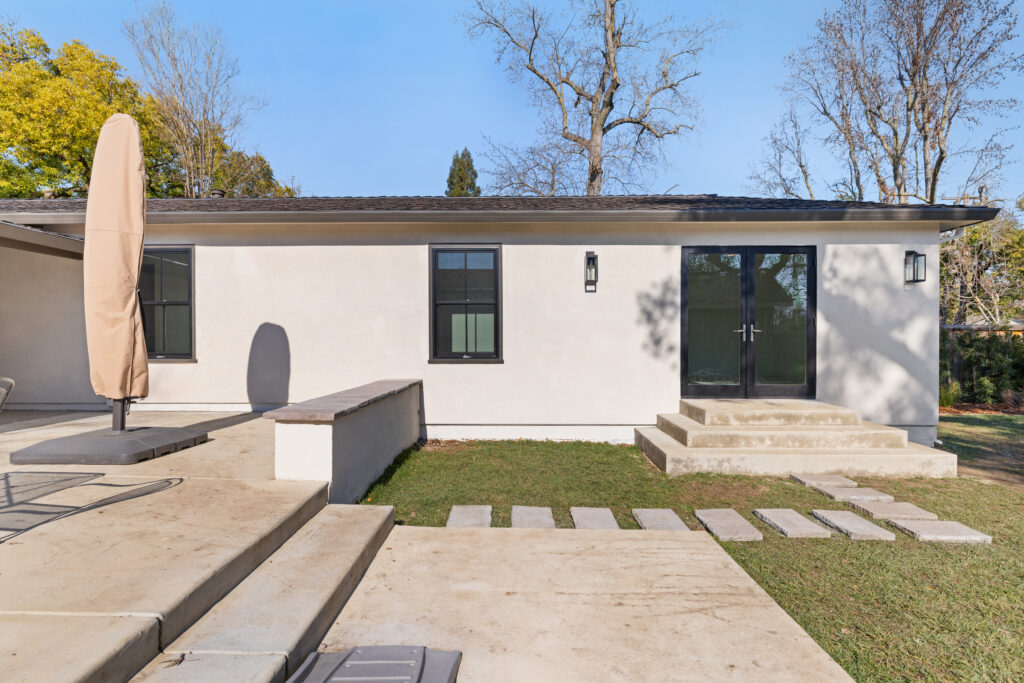
Home Addition Construction
While ADU garage conversions create a separate living space by transforming an existing structure, a home addition expands the home you already love—adding square footage exactly where you need it most. Whether you’re growing your family, upgrading your primary suite, or creating an open-concept living area, our Sacramento design-build team plans and builds room additions that blend seamlessly with your home’s layout, architecture, and finishes—so it feels original, not “tacked on.”
Adding Square Footage to Your Home
Adding square footage is one of the best ways to improve daily function and home value—but how much does it cost to add a room to a house depends on your home’s existing layout, the type of room (bedroom, primary suite, family room), foundation and framing needs, and how far you go with finishes, plumbing, and electrical. Our design-build team helps you define scope early, uncover site and structural factors upfront, and build a clear plan so you can make confident decisions before construction begins.
Home Addition Costs
Goals & Scope
Home addition costs are driven first by what you’re adding (bedrooms, bathrooms, primary suite, nursery/guest space, office, etc.) and how much function you’re trying to gain—not just square footage; for example, our Arden Park new home addition project expanded a home by over 800 sq ft, from a 3 bed / 2 bath to 5 bed / 4 bath specifically to support a growing family’s need for privacy, comfort, and long-term livability.
Feel free to check out this video here to see what it looks like to build a home addition.
Site Constraints & Lot Shape
Your property’s geometry can make the same “size addition” cost more or less—tight side yards, access limitations, and irregular lot shapes can force more custom planning, framing, and layout decisions; in the Arden Park addition project, the pie-shaped lot and narrowing side yard required strategic design to maximize usable width and extend the addition while maintaining a natural flow in the backyard.
Budget for Primary Suite Additions
A primary suite addition can be a “premium” home addition project because you’re combining a high-impact space (bedroom) with high-cost components (bathroom + windows/doors + finishes). In the Arden Park home addition project, the homeowners wanted a multi-functional suite with French doors, large casement windows, room for a king bed, and even a small home office area—all of which influences material, labor, and design complexity.
Bathrooms are one of the most expensive rooms per square foot due to plumbing, waterproofing, tile, glass, ventilation, and fixture selections; the Arden Park primary bath included a 6×4 shower, dual sinks, and custom cabinetry with brass hardware, plus higher-end finish choices that elevate comfort—but also impact budget.
Building Seamless Home Additions
When homeowners want an addition to feel original—not “tacked on”—it often requires additional detailing and finish coordination. The interior of our Arden Park project accomplished design continuity by matching the guest bath to the home’s existing aesthetic with alder wood cabinetry, quartz countertops, and sleek black hardware to keep the look cohesive.
For the exterior, you’d never know this home doubled in size just by looking at it. Every detail—rooflines, stucco, windows, gutters—was flawlessly matched to make it look like it was always there. This is one of the hardest technical challenges of home addition construction. Make sure that your home addition contractor helps you make smart scope decisions early by solving layout, flow, and system routing on paper before construction starts.
West Sacramento Primary Suite Room Addition
The Arden Park home addition project above was pretty massive, over 800 sq ft. Here’s what a smaller home addition project looks like. In this video below, we’re showcasing a beautiful primary suite room addition in West Sacramento, California. This ~300 sq ft room addition was designed to blend seamlessly with the existing home, adding comfort, space, and modern style.
Our Services
- FAQs
FAQs About Home Additions
A home addition is a construction project that adds new square footage to your existing home. This can include a new bedroom, expanded living room, larger kitchen, primary suite, or even a second story. A well-designed addition should match your home’s style and feel like it was always part of the original layout.
Home addition costs vary based on size, structural needs, and finish level. The biggest cost drivers are usually foundation work, roofing tie-ins, utility relocation(plumbing/electrical), and whether the existing home needs major modifications. The best way to get a real number is a site evaluation and a defined scope.
Yes—many homeowners treat a garage conversion as a type of home addition because it adds usable living space to the home. The difference is that the slab and structure often already exist, which can reduce build time and cost. D. Loesch Construction can help you compare a garage conversion addition vs a traditional addition based on your layout, budget, and goals.
It depends on your home’s layout and what kind of space you need. Garage conversions can be faster and more cost-effective if the existing structure is in good condition, while room additions allow more flexibility for layout, size, and placement. We’ll help you choose the option that gives you the best function and long-term value.
- Contact Us
How to Contact DLC Step by Step
Reach D.Loesch Construction for Home Additions
Follow these steps to start your expansion:
- Visit us: Visit D. Loesch Construction to view our portfolio of integrated additions.
- Submit Form: Fill out our quick online form with your project details and goals.
- Receive Call: We will call you to discuss your vision and initial project scope.
- Free Consultation: Get a FREE professional design consultation to review feasibility and options.
- Site Visit: Schedule your expert on-site inspection and measurement within 24 hours.
No content is added yet.
Contact Number
(916) 208-3406
dloesch@dlcbuilt.com