
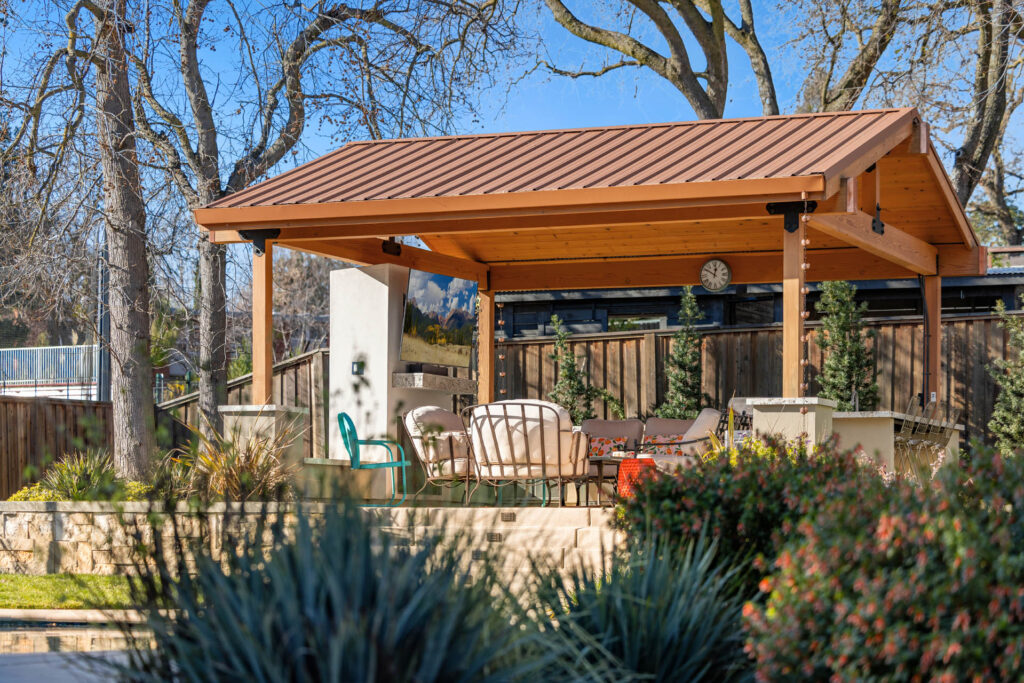
Outdoor Living Design & Construction in Sacramento
Outdoor living should feel like a true extension of your home—not a patchwork of upgrades. We design and build complete outdoor living spaces that are comfortable, durable, and code-compliant, from patios and decks to hardscapes, custom outdoor kitchens, fire features, lighting, and landscape integration.
If you’re planning a full backyard remodel or backyard renovation, the best results come from treating the space like a connected system—layout, drainage, materials, utilities, and comfort—so it performs well over time and feels cohesive with the home. With thoughtful planning for permitting, site grading, and irrigation safety, we help create backyard spaces that enhance daily life and support long-term property value.
We build outdoor living spaces across Sacramento and surrounding areas, coordinating design, permitting, and construction as one team.
Check out our full backyard transformation video below to see what a complete outdoor living project looks like—from planning and permitting to final build.
Outdoor Living Construction
Outdoor living construction requires the same level of planning and coordination as interior construction—especially when durability, drainage, and long-term performance matter.
Outdoor living construction works best when it’s treated like real architecture—not an afterthought. That means designing the space around use, comfort, drainage, and durability, while coordinating materials and details so the backyard feels cohesive with the home. In a full backyard remodel, this is what prevents the space from feeling “added on” in phases.
Backyard retreats built for real-life living
Great outdoor living spaces start with function. We design around how you’ll actually use the yard: hosting and seating flow, dining and cooking zones, kids and pets, privacy, sun exposure, and natural paths between the house and the backyard. The goal is to create a layout that feels intuitive—so you use the space more often, not just when guests come over.
Key “real-life” layout decisions often include:
- Where gathering happens (fire, dining, lounge, pool)
- Clear circulation paths so the space doesn’t feel crowded
- Shade strategy for Sacramento afternoons
- Privacy and sightlines from neighbors
- Making the outdoor space feel connected to the kitchen/living area
Weather-proof hardscapes designed for durability
Outdoor spaces take more abuse than interiors. Sun, temperature swings, moisture, and soil movement all affect performance—especially in patios, retaining walls, decks, and hardscape transitions. That’s why base preparation, drainage planning, and material selection matter as much as aesthetics. A beautiful patio fails if it settles, pools water, or cracks prematurely.
We build with durability in mind by focusing on:
- Proper compaction and base layers
- Drainage and slope planning
- Expansion joints and material transitions
- Concrete/stone/wood choices based on exposure and use
- Structural detailing that prevents long-term movement issues
Energy-efficient outdoor builds for comfort and performance
Outdoor comfort isn’t just a heater or a fan—it’s planning. Sun angles, prevailing wind, shade structures, and lighting strategy all influence how long you can comfortably use the space each day and across seasons. Done right, your backyard becomes usable earlier in the morning, later at night, and longer into the year.
Outdoor Living Permitting and Planning
Permitting and site planning are often what separate smooth outdoor living projects from delayed or redesigned ones.
Most outdoor living projects run into trouble when permits, drainage, and utilities are treated as “later problems.” Good planning upfront prevents redesigns mid-build and protects your budget. We evaluate what triggers permits, how water moves across the property, and how utilities will be routed safely before construction begins.
Outdoor living permitting and what typically triggers approvals
Many outdoor living components require permits—especially covered structures, gas and electrical extensions, outdoor kitchens, and fire features. Permitting requirements vary by jurisdiction and scope, so we confirm what applies early to avoid delays.
Common permit triggers include:
- Attached patio covers/pergolas and roof structures
- New electrical circuits, line-voltage lighting, subpanels
- Gas lines for grills, fire pits, or fireplaces
- Plumbing for sinks, drains, and outdoor kitchens
- Structural work or major grading/retaining walls
Site grading patios decks for drainage and long-term protection
Water is one of the biggest long-term threats to outdoor construction. If a patio holds water or runoff is directed toward the home, you can end up with settlement, staining, or foundation concerns.
We plan finished elevations, slopes, and drainage paths to protect both the outdoor space and the home’s foundation.
Irrigation safety outdoor planning to prevent pooling and damage
Irrigation systems and outdoor living features often conflict if not coordinated—spray hitting decking, saturated soil near hardscapes, or pooling near structures.
We consider irrigation routing, drainage, and landscape water features together so the outdoor build performs well and is easy to maintain.
Utility planning for kitchens, lighting, and fire features
Outdoor kitchens and fire features require coordinated planning for gas, electrical, plumbing, and ventilation. Designing these systems upfront avoids rework, trenching surprises, and code compliance issues later.
We plan utility paths, shutoff locations, electrical capacity, and clearances early so everything functions safely, meets code, and integrates cleanly into the finished outdoor living space.
Custom Outdoor Kitchens
Outdoor kitchens are among the most impactful—and most complex—features in a backyard remodel, requiring coordinated planning for layout, clearances, utilities, weather exposure, and finish durability.
Custom outdoor kitchens layout and workflow planning
A well-designed outdoor kitchen functions like a real kitchen. We plan:
- Prep, cook, and serve zones
- Clearance around grills and appliances
- Relationship to seating and dining areas
- Traffic flow for entertaining
The goal is a kitchen that’s enjoyable to cook in—not just visually impressive.
Want to see how this comes together in a real project? Check out our Carmichael outdoor kitchen walkthrough below, where we break down layout, utilities, and material decisions.
Outdoor kitchen cost California and the biggest cost drivers
Outdoor kitchen costs vary widely based on:
- Appliance selection (grill, pizza oven, refrigeration)
- Countertop materials and fabrication
- Framed vs masonry construction
- Gas, electrical, and plumbing distances
- Ventilation and cover requirements
The more integrated the kitchen is with the overall outdoor space, the more important early planning becomes.
Power, gas, plumbing, and ventilation requirements
Outdoor kitchens must meet safety and code requirements for utilities, shutoffs, clearances, and ventilation. We design these systems to be safe, accessible, and easy to maintain..
Backyard Fire Pits and Fire Features
Fire features create natural gathering points and extend outdoor use into cooler months—but comfort and safety depend on correct placement and design. For many homeowners, an outdoor fireplace becomes the visual anchor of the entire backyard remodel, especially when it’s paired with covered seating and lighting.
Want to see how a fire feature comes together in a real backyard remodel? In the video below, we walk through a Carmichael backyard fireplace project, explaining placement, materials, and build decisions.
Backyard fire pits: placement, seating, and material choices
Fire features should enhance comfort—not create smoke issues or safety concerns. Placement, wind direction, seating distance, and material choice all play a role in usability.
Fire pit vs outdoor fireplace cost and what drives pricing
Fire pits are typically more budget-friendly and flexible. An outdoor fireplace creates a stronger architectural focal point but requires more structure and foundation work. Cost differences are driven by size, materials, gas routing, clearances, and whether the feature is freestanding or integrated into a larger wall/structure.
Clearances, smoke management, and safety considerations
Fire features must meet clearance, ventilation, and safety requirements to be code-compliant and comfortable to use. Proper placement accounts for wind direction, seating distance, nearby structures, and combustible materials—helping prevent smoke issues, overheating, and long-term maintenance problems.
Covered Outdoor Living
Covered structures transform outdoor spaces into true secondary living areas by providing shade and weather protection. A well-designed covered patio can make the backyard usable more hours per day and more months out of the year—especially in Sacramento summer heat and shoulder-season weather.
Pergola cost California and what impacts the budget
Pergola costs vary based on size, material choice, structural design, and whether the structure is freestanding or attached to the home. Custom designs, premium materials, and structural integration typically increase cost but also improve durability and longevity.
Covered patio cost California and what’s included
Covered patios provide full overhead protection and often include structural framing, roofing materials, drainage integration, and permitting. Because they function more like exterior additions, they usually require more engineering and coordination than open structures.
Pergola vs covered patio: choosing the right structure
Pergolas offer filtered shade and an open feel, while covered patios provide year-round protection from sun and rain. The right option depends on sun exposure, how you plan to use the space, and whether full weather coverage is a priority.
Covered outdoor living ideas for sun, shade, and rain
We design covered structures around sun angles, rooflines, and seasonal weather patterns to ensure outdoor spaces stay comfortable during hot afternoons, cooler evenings, and occasional rain.
Outdoor Lighting Installations
Outdoor lighting installations for ambiance, safety, and security
Lighting enhances usability after dark while improving safety and security. Path lighting, accent lighting, and task lighting all serve different purposes.
Effective outdoor lighting balances:
- Path and step lighting
- Accent lighting for features
- Task lighting for kitchens and dining
- Security lighting where appropriate
Low-voltage vs line-voltage outdoor lighting
Low-voltage lighting is energy-efficient and flexible, making it ideal for landscape and accent lighting. Line-voltage lighting provides higher output and is often used for task areas or larger spaces. We help determine the right mix based on layout, use, and long-term maintenance.
Smart controls, zones, and night-use planning
Timers, zones, and smart controls allow lighting to operate automatically and efficiently. Zoning lets different areas turn on only when needed, improving usability while reducing energy consumption and manual switching.
Outdoor Living Costs and Value
Outdoor living costs vary widely based on scope, utilities, structures, and site conditions.
How much does an outdoor living space cost?
Outdoor living projects range from simple upgrades to full backyard remodels. Costs are influenced by:
- Hardscape and structural scope
- Utility work (gas, electrical, plumbing)
- Site access, grading, and drainage
- Material and finish selections
Clear planning upfront helps control cost and avoid scope creep during construction.
Outdoor living space cost per square foot
Cost per square foot can be a helpful comparison, but outdoor spaces don’t scale evenly. Utilities, structures, and custom features often matter more than size alone—similar to interior construction, with added site considerations.
Deck vs patio cost comparison
A patio is built at ground level using materials like pavers or concrete and is often ideal for flat backyards. A deck is a raised structure, typically wood or composite, used when elevation changes or uneven terrain make a patio less practical. Each has different structural, drainage, and cost considerations, and the best choice depends on your property and how you plan to use the space.
From a cost perspective:
- Patios tend to be more affordable for larger ground-level spaces when site conditions are favorable.
- Decks often cost more due to structural labor and materials but can unlock usable space on challenging sites where patios aren’t feasible.
Ultimately, the decision isn’t just about upfront cost—it’s about choosing the solution that best fits your property, minimizes long-term maintenance, and creates a comfortable, usable outdoor space that integrates naturally with your home.
Property value outdoor spaces and resale impact
Well-designed outdoor living spaces improve daily livability and are highly attractive to buyers. In Sacramento’s climate, functional outdoor areas are often viewed as an extension of the home—supporting strong resale appeal when thoughtfully planned and built.
Outdoor Living Ideas
Outdoor living ideas work best when they’re grounded in real site conditions and real daily use—not just inspiration photos. This section is meant to help you think through what fits your yard, your lifestyle, and your budget—whether you’re collecting patio design ideas or mapping out a full backyard renovation with multiple zones.
Outdoor living space ideas with fire pit
Fire pits create natural gathering points and extend outdoor use into cooler evenings. Popular options include circular seating layouts, linear fire features, and fire pits integrated near outdoor kitchens or lounge areas. Placement, wind direction, and clearances all affect comfort and usability.
Outdoor living space ideas with pergola
Pergolas provide filtered shade while maintaining openness and airflow. They work especially well over dining areas, seating zones, or walkways between indoor and outdoor spaces. Material choice, orientation to the sun, and whether the pergola is freestanding or attached to the home all affect both function and cost.
Small backyard outdoor living ideas
Smaller yards can still support highly functional outdoor living spaces with smart layout decisions. Built-in seating, multi-use surfaces, compact kitchens, and vertical elements help maximize usability without overcrowding the space. Clear circulation paths and careful furniture sizing make a big difference in how the space feels.
Modern outdoor living spaces
Modern outdoor living designs emphasize clean lines, durable materials, and low-maintenance finishes. Concrete, steel, stone, and integrated lighting are common elements, often paired with minimal planting and streamlined furniture. These spaces are designed to feel cohesive with modern interiors and architectural styles.
Backyard patio ideas, backyard deck ideas, and backyard pergola ideas
Many outdoor living projects combine multiple structures—such as patios transitioning into decks, pergolas covering key zones, or tiered spaces that follow natural grade changes. The best patio design ideas account for drainage, elevation changes, and material transitions so the space feels unified rather than pieced together.
Our Services
- FAQs
Outdoor Living FAQs
Many outdoor living projects do require permits, especially when construction includes covered structures, utilities, or structural elements. Permit requirements vary by jurisdiction and by scope, which is why confirming them early is critical.
Projects that commonly trigger permits include:
- Covered patios, pergolas, and roof structures
- Outdoor kitchens with gas, plumbing, or electrical connections
- Outdoor fireplaces and fire pits tied into gas lines
- New electrical circuits or line-voltage lighting
- Major grading, retaining walls, or structural hardscapes
Permits aren’t just a formality—they ensure the project meets safety, structural, and fire codes and protect your home’s long-term value. We evaluate permitting requirements during the planning phase so inspections and approvals don’t delay construction mid-project.
Yes. Many homeowners choose to phase outdoor living projects to align with budget, timing, or long-term plans for their property. A phased approach works best when there’s an overall master plan guiding the build.
Common phasing strategies include:
- Building the patio or deck first, then adding an outdoor kitchen later
- Installing fire features and lighting after primary hardscape is complete
- Adding a covered patio or pergola as a second phase once the layout is established
The key is planning all phases together upfront—so drainage, utilities, elevations, and spacing are already accounted for. This prevents rework and ensures each phase integrates cleanly into the final backyard remodel.
The first step is a feasibility and planning conversation focused on your property—not product selection or finishes. This early stage helps define what’s realistically possible before design and construction begin.
We typically evaluate:
- How you want to use the space (entertaining, cooking, lounging, family use)
- Site constraints such as slope, access, drainage, and setbacks
Permit requirements and utility availability - Rough budget range and phasing options
This upfront clarity allows the design to move forward efficiently and helps avoid costly changes once construction starts.
Build time depends on scope. Simple patios or decks may take a few weeks, while multi-feature outdoor living rooms with kitchens, fire features, utilities, and covered structures can take 8–12+ weeks, especially with permitting and utility coordination.
Typical timelines include:
- Simple patios or decks: 2–4 weeks
- Patios with lighting or fire features: 4–6 weeks
- Outdoor kitchens or covered patios: 6–10 weeks
- Full outdoor living rooms with kitchens, fire features, lighting, and structures: 8–12+ weeks
Permitting, inspections, and utility work can extend timelines, which is why planning and approvals are addressed before construction begins.
Today’s outdoor living trends focus on comfort, function, and seamless indoor-outdoor flow rather than standalone features. Homeowners want spaces that feel like real extensions of the home.
The most popular outdoor living features include:
- Outdoor kitchens designed for real cooking and entertaining
- Outdoor fireplaces and fire pits as central gathering points
- Covered patios and pergolas for shade and year-round use
- Integrated lighting for ambiance, safety, and nighttime usability
- Multi-zone layouts with dining, lounging, and cooking areas
In Sacramento’s climate, well-planned backyard remodels that combine shade, fire, and cooking spaces consistently deliver both daily enjoyment and strong resale appeal.
Designing outdoor living spaces starts with function first—how you want to use the yard day-to-day—then builds outward into layout, comfort, and construction reality. The most successful outdoor spaces are planned like “outdoor rooms,” with clear zones, natural circulation, and the right mix of shade, lighting, and durable materials.
If you’re planning a full backyard remodel or backyard renovation, the biggest design mistakes usually come from treating features separately (patio now, kitchen later, lighting later). A cohesive master plan keeps everything aligned so the final space feels intentional—and avoids rework.
- Contact Us
How to Contact DLC Step by Step
Sacramento’s Premier Outdoor Living & Backyard Retreats
Follow these steps to plan your backgyard transformation:
- Visit us: Visit D. Loesch Construction for backyard inspiration.
- Submit Form: Detail your backyard goals and fire/water feature ideas on our online form.
- Receive Call: Our outdoor specialist will call you to discuss your vision and local codes.
- Free Consultation: Receive a backyard renovation consultation covering design and permitting.
- Site Visit: Book your professional site evaluation and grading analysis within 24 hours.
No content is added yet.
Contact Number
(916) 208-3406
dloesch@dlcbuilt.com